Blogs Directory

Showing posts with label Curacao. Show all posts

Sunday, July 19, 2020

What is it About Cruising that Makes Us Love it So?


And miss it so!

“Cruise Fans Yearn to Ship Out,” declared a recent Wall Street Journal headline. “Landlubbers who wrote this industry off for dead just don’t get it…it seems hard-core cruise goers can’t wait to climb back aboard,” the article went on to say.

And then the WSJ handed us a responsibility as big as the ships we sail in:  it’s the “hard-core cruise goers” who are going keep the industry afloat.

Now, back to my question: why do we love cruising so?

Could it be because of the view? The ocean’s gradations of blue, the Technicolor sunsets or vast unbroken horizon?

Saying "Bon Voyage" to Ft. Lauderdale under an ever-changing sky


Maybe it’s the dancing in the piazza or bodega, or outdoors under the stars.
 
"YMCA" on the Royal Princess

Or, melting into a massage, sharing secrets at The Marriage Game or gambling the night away.
 
Healing on Harmony of the Seas
It could be the island hopping, each day bringing a different vibe—from the peaceful Mahogany Bay to the frenetic streets of Aruba to the fanciful Curaçao skyline.

Colorful Curacao

Perhaps it’s nabbing front-row seats at “Mamma Mia,” then hitting a comedy club, followed by jazz—without paying a cent or stepping outside.


Then, it could be all about the food. Whether it comes to our door or we actually have to walk to it, the food is there whenever we want it. From burgers to bruschetta, fries to fajitas and cupcakes to mousse cakes.

Sweet sampling from Harmony of the Seas
For many, it’s the sunning, drinking, grooving to music and people-watching at the pool from sun up to sun down, topping it off with a hot tub dip.
 
Fun in the sun on Allure of the Seas
Or, is it the chance to do flip-flops 24/7? And unpack just once.

No wonder we can’t wait to climb that gangway. And we’re willing to do it even if it means wearing face masks, keeping our distance, taking our temperature and getting served in the buffet.

If we’re being charged with keeping the industry going, we’ll do it with the passion only a veteran cruiser can understand. So, dear reader, the time has come for us to do the only decent thing—book our next cruise!


Saturday, March 4, 2017

15 Shades of Blue

Think of the Caribbean and you think blue, right? In fact, there are many “shades” of blue when you cruise the Caribbean Sea. 

Blue is the color of:
  1. Your passport—Don’t leave home without it! And be sure it doesn’t expire within six months of your trip.
  2. The sky above your balcony—With no powerlines to obstruct your view, the sky seems bluer, bigger, bolder. And if you’re headed for the ABCs (Aruba, Bonaire, Curaçao), you’ll see more of that blue sky than anywhere else. Aruba gets only 16 inches a year of rain; compare that to 46 for New York.
    The sky seems bluer, bigger and bolder from your balcony
  3. The water below your boat—If you’ve never cruised the Caribbean, know this: those photos you’ve seen are real. The waters of Bonaire, St. Maarten, and the U.S. Virgin Island gems of St. Croix and St. John are just that blue, just that clear, just that calm.
    Blue as far as you can "sea" in Bonaire 
  4. The resorts the lines call their own—Carnival’s private resorts of Princess Cays (Bahamas) and Mahogany Bay (Roatan), and Royal Caribbean’s Labadee (Haiti) boast blue hue water that’s tranquil and see-through, perfect for swimming, sunning and snorkeling. And when your ship comes in, you (and your 2,000-6,000 fellow travelers) get the resort all to yourself.
    Calm and comfortably cool is the blue water at Princess Cays
  5. The pools of port—Three neat port pools that come immediately to mind are at Grand Turk, Costa Maya and Carnival’s newest resort in the Dominican Republic, Amber Cove. These three pools are big, with plenty of room for making a splash.
    A part of the vast winding pool of Amber Cove
  6.  The flags of Barbados and Curaçao—Barbados in the Eastern Caribbean and Curaçao in the South—both great ports to visit—use blue as the primary color of their national flags, to reflect the sea and the sky.
  7.  The iguana of Grand Cayman—This blue lizard, according to Wikipedia, is a special variety found in Grand Cayman and is on the endangered list. In fact, the only one we saw on our visit was this guy below:
  8. The cobblestones of old San Juan—Pull into port in San Juan and you’re just a few steps away from cobblestones made from adoquine, a blue stone cast originally brought over on Spanish ships.
  9. The logos of the lines—Not surprisingly, the mermaid, ship, anchor and X logos of Princess, Holland America, Royal Caribbean and Celebrity are all blue.
  10. Curaçao’s namesake liquid—Made from local oranges, with a little help from food coloring, curaçao liqueur is unmistakable in its color and squat round bottles.

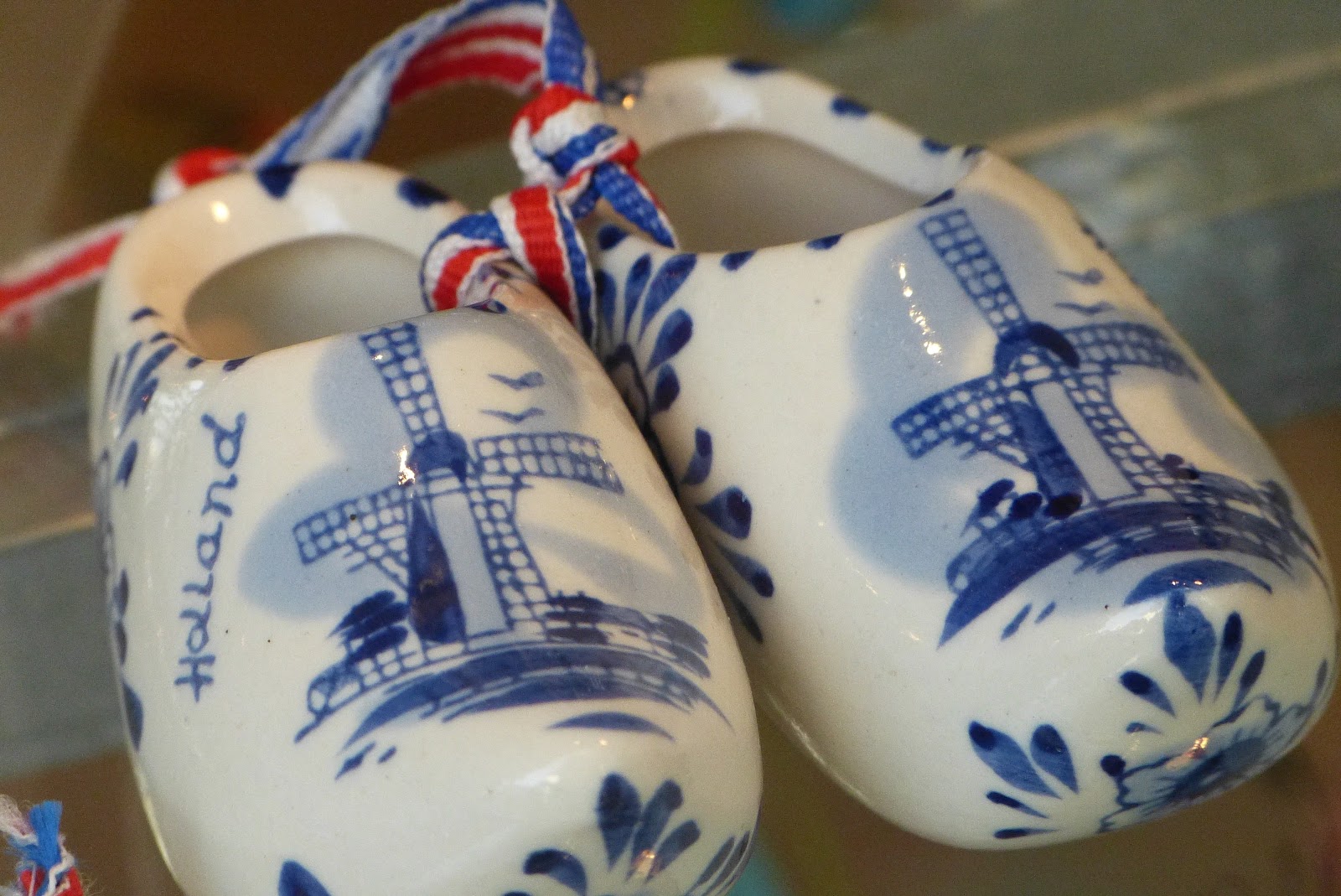
  11. The delft and faux delft trinkets of the ABCs—Browse the tourist shops of the Dutch isles of Aruba, Bonaire and Curaçao to find some of the real hand-painted stuff, but more of the mass-produced kind. These are inexpensive, and make great Christmas tree ornaments, magnets and collectibles.
    Mass-produced delft, but that everyone can afford
  12. LarimarThe lovely baby blue stone is from the Dominican Republic, but sold on many of the islands at a very reasonable price (note that they vary in quality). We picked up good quality earrings in St. Thomas’ Charlotte Amalie for about $40.
  13. The female cruiserWhat cruising woman can resist a shirt with blue-and-white stripes in classic nautical style (or “nausical” as one retailer calls it). Navy blue, says Wikipedia, got its name from the dark blue uniforms traditionally worn by many navies around the world.
  14. That sign that it will come to an end—Alas, blue is also the color of the Customs card that appears on your bed—sometimes as early as the second day of the trip.
  15. My mood…when it’s all over.

Friday, August 19, 2016

How Blue is the Ocean, How Gorgeous is the Sky


I fell madly, wildly in love in Willemstad, Curaçao.

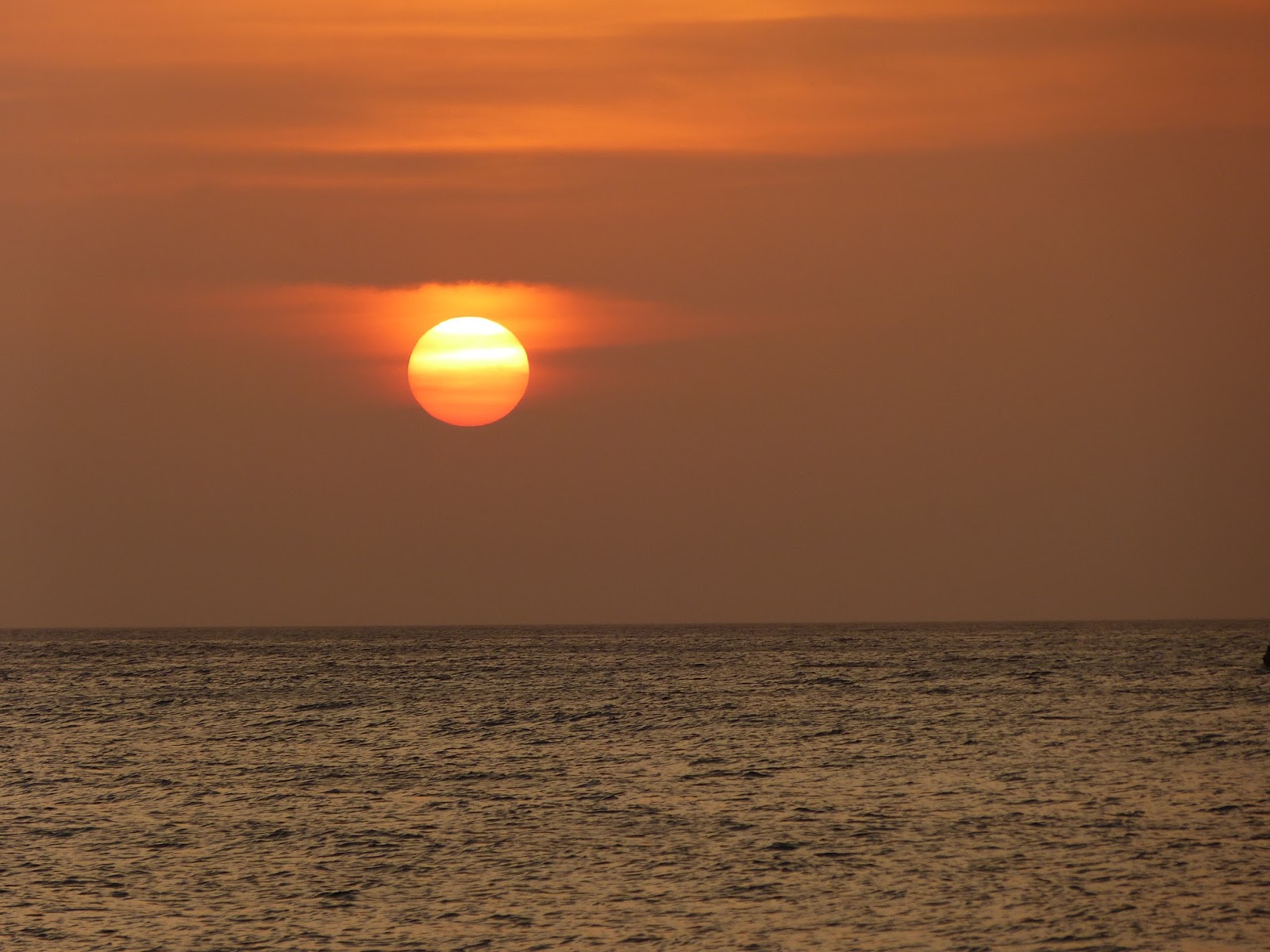
With the absolutely stunning, positively magical, spectacularly flamboyant scene in the sky. And I’ve been hooked on sunsets ever since.

There's positively no better place to see a sunset than on your stateroom balcony or a deck of a cruise ship. No powerlines, lampposts or trees to block the view. Just wide open sea and sky. It’s a vast canvas for nature’s most perfect paintbrush.


The launch of my love affair with sunsets
If you’re like me, when you see a magnificent sunset, you remember it always. You not only remember the way the sky looked, but where you were and what you were doing. And photos of those moments bring it all back in living color.

There are so many ways you can take sunset photos—whether your electronic device of choice is a smartphone, tablet or camera. Consider this:

Pink one minute, blue the next. In a very short period, the colors and configurations can change radically—and dramatically. Take lots of shots—don’t be stingy—you’ll be surprised at the variation.

When the clouds roll in. Sunsets get even more interesting when the clouds get in your way. And as the photo sites say, don’t forget to turn around—it may be even more eye-popping behind you.

Spotlight through the clouds


Sunshine on the water. Another neat shot is focusing on the ocean as a blazing setting sun reflects on the water, changing it to a most unreal kind of color.

Ft. Lauderdale in a blaze of color
Picture this. Shooting a sunset with buildings in the distance can add an interesting element to your photo. So, too, can capturing a bird in flight against a color-streaked sky.

A third of something else. The pros talk about the “rule of thirds,” where the most interesting subject is not in the center of the shot, but rather to one side, above or below. So, your best shot might be with the setting sun off to the left or right of your frame.

Little bit of this, a lot of that. One decision you’ll need to make is how much ocean and how much sky you put in your picture. Try more of one and less of the other, than reverse it, to see what you like best.


Best in silhouette. Getting your cruise companion in silhouette or from behind as he/she gazes into the distance can make a different shot.
The sunset, sea and me


Being at the ready. A camera-worthy sunset can come up when you least expect it. Have your camera ready to go. You’ll need to be able to grab it when you need it, because sunsets are quickie events.


Getting in front of them
Being there when it happens is the biggest challenge. It’s not like there’s an announcement on the PA, “There’s a great sunset, guys. Stop what you’re doing and take a look.” I’m sure we’ve missed countless beauties ‘cause we’ve eaten early.

But here’s something I wish I had known earlier: this great website lets you look up—even long before your trip has even started—the time of sunrise and sunset at the ports you’re visiting when you’re going to be there.

In the field “Sun,” Sunrise and Sunset Times,” enter the city and island. Then on the next screen, pick the menu “Sunrise and Sunset,” scroll all the way to the bottom and it will allow you to pick a month.

You’ve got the photos. Now what?
So, what do you do with those photos? You can frame them for your wall, add them to your digital frame or turn one into a mousepad. See the posting “What to Do with Those Cruise Trip Photos” for some ideas.

Musing’s Top Tip: Didn’t get enough of the sky at sundown? There’s a great (free!) smart phone app you can use to identify the stars in that dark wide open night sky. It’s called SkyView® and you can get it from Google Play.


Friday, June 10, 2016

Some of the Best in Cruising Part 2: The Ports

When I’ve been asked for my favorite Caribbean island, I struggle to find an answer. Because I like so many, each for a different reason. But what they all have in common is plenty to see and do close to where the ship pulls in (no excursion required!). Here, then, is my “best of” list for the Caribbean cruiser:

Shopping: Cozumel. There’s great shopping right at the pier, or you can grab a cab into town for a mind-numbing selection of more of the same. Colorful ceramics; onyx chess sets and figurines; silver jewelry with gems and without; and inexpensive knickknacks from maracas to magnets makes shopping a blast. You’ll find consumables there, too. Read more at Chocolate, Rum and Spice: Food Souvenirs of the Caribbean.  

Cozumel in color.
Best beach: private islands. These are, simply put, paradise. Carnival’s Mahogany Bay in Roatan, Honduras; Princess Cays in the Bahamas; and Royal Caribbean’s Labadee on Haiti offer the quintessential Caribbean beach day. They’ve got powdery sands and calm blue waters perfect for swimming and water sports; palms and hibiscus and bougainvillea to feast the eyes; and lounge chairs everywhere, along with plenty of shops and ways to soothe a parched throat.

The private islands are surely the best way to relax on a cruise.
Lined up and ready to go at Princess Cays.
Biggest variety: St. Maarten. A beach right in town, cheap chair-umbrella-beer packages, surfside seafood shacks, water sports, great shopping, gambling and even a blast from the past—an automat—selling local foods like the Dutch kroket. This lively place of merriment is constantly changing—for the better. There’s more at “How to Spend Your Cruise Day in St. Maarten.”

Prettiest harbor: Dominica, Bonaire. This one’s a tie. Dominica has perhaps the most compact port, with its location at the foot of surrounding velvety green hills. Be prepared to invest some leg muscle if you walk around town, where you can visit a farmers market or grab some free wi-fi at the local library. Or, shop the stalls at the pier, where you can get locally woven baskets and other souvenirs.

Then there’s the transparent waters of Bonaire, where a stroll along the waterside promenade is like a visit to an aquarium. Vibrant-colored fish swish by underfoot, and the sea around you is a painter’s pallet of shades of azure. Read more at Knowing Your ABCs.

A walk along the promenade in Bonaire is like a visit to an aquarium.
Most European-ish: St. Barts. Part Riviera, part Caribbean, totally French, St. Barts is remarkable for many reasons. You won’t find any bargains here, but you’ll marvel at the mega yachts parked in town, the hilly and winding streets that force cars and all manner of local vehicles to part halfway on the sidewalk. You can sip café au lait at a seaside café, nibble on quiche from the local patisserie, marvel at the wines lining the walls at the supermarche´ or browse the fashionable shops. St. Barts is off course and worth it.

Paris? Mais non, the patisserie of St. Barts.
Time travel: San Juan. With two well-preserved, exhibit-laden forts, a dramatic fountain honoring the island’s birth, blue cobblestone streets, mosaic stairwells, and even shops selling Spanish hand fans and the short jackets of the matadors, the old town of Puerto Rico’s capital takes the cruiser back in time. No DeLorean needed here—just a little bit of pedestrian power.

San Juan is one of those ports that are made for walking.

The ancient wall today protects San Juan from sailboats.
Memorable feature: Curaçao. This Southern Caribbean Leeward island off the Venezuelan coast has several oddities—a floating bridge that takes you to the colorful Punda District when it’s not stepping aside to let boats through, and a fruit and veggies market where vendors sell their stuff out of wooden boats tied up to the dock. And if that’s not enough, how about liquor that’s made from oranges but is blue in hue?

Float your way to Curacao's Punda district.

So, that’s my “best of list.” What’s yours?

Musing’s Top Tip: Did you miss Some of the Best in Cruising Part 1? Then check it out here, for ship life highlights—from what’s on your plate to what’s on the stage.


Friday, September 25, 2015

When Cruising is Unforgettable

A big reason I think most of us travel is for that element of surprise. Let’s face it; our lives can become pretty routine. Leaving home brings out the explorer in us and brings the promise of the unforgettable.
 
As we’ve cruised over the years, we’ve had a number of moments that will stay with us always.
 
Many have been in the ports we’ve visited, and some have been onboard. Here are just a few:
 

Curaçao in color
Sunset over Curaçao. With no trees or power lines in the way, you can get some amazing sunsets over the sea. Rushing back to the ship in Curaçao after putzing around in town, we were treated to an amazing blaze of color that changed by the minute. Cameras came out and we captured memories that bring us back to that day again and again.
 
The schooner, the sunset and the Pitons. During a slow turn around St. Lucia’s Pitons on Holland America’s Noordam, a schooner in full sail passed between us and the iconic peaks, just as the sky was putting on its own show. The confluence of the elements made for some spectacular shots.

Some twists and turns, and then a peek into paradise, on the lovely isle of St. John
St. John the Divine. Tired of shopping in St. Thomas, we ventured out on an excursion to its sibling  isle of St. John. The bus took us up and down the steep slopes, and round and round tight turns. But nothing could have prepared us for the overlooks—pure paradise. It’s no wonder the island’s remote and untouched beaches show up again and again in cruising brochures and websites (and Musing’s blog wallpaper).
 
Alone on the bay. We couldn’t tear ourselves away from Mahogany Bay—even when nearly everyone else was back on the ship. The prize was the chance to float in the calm clear water—completely alone with a relaxation seldom known.
 
Sugar cane and an ocean view. The quality of excursions varies wildly, but the best we took was a bus tour around Barbados. The driver was knowledgeable and chatty, happily doling out Barbados 101 as we passed banana trees, poinsettias in the wild and windmills. A lookout stop over the wild Atlantic side brought incredible ocean views for great photo-taking and a vendor who shared his sugar cane with me for my first taste of raw sweetness.
 
Juiced up and iced up in Glacier Bay. The cold gray mist that chilled our bones was quickly forgotten as the Golden Princess slid gingerly through the narrow mountain-framed channel and icy silent waters of Glacier Bay, eventually revealing a massive baby-blue glacier, its frozen spires piercing the cloudy skies. While not a postcard-perfect Alaska day, most definitely one we’ll not forget.
 
Midnight at the buffet. Our first cruise on Celebrity’s Constellation started it all for us, now 10 years in the past. The eye-popping midnight buffets may be long gone, but cruising’s still making us marvelous memories…


The Constellation's Grand Buffet is a thing of the past, but the memory lives on
…like a stunning sunset at a Ft. Lauderdale sailaway….water show high dives on Allure of the Seas…the Constellation room steward rushing to open our cabin door for us…Michael Love truffle pops at the Welcome toast on the Caribbean Princess…Christmas music with a reggae beat on the ferry into Philipsburg…

What are some of yours?


Friday, August 28, 2015

Of Chocolate, Rum and Spice: Food Souvenirs of the Caribbean

It’s truly hard these days to find any real handicrafts. From Basseterre to Bridgetown, most of what we see is all the same—made in China, but stamped with a different port name.
 
What you can still get that’s unique and local is of the edible (and drinkable) kind. Food stuffs make great gifts for those you left behind—if you can bear to part with them once you get home. And if you pick up a few for yourself, it’s one way to keep the cruise going after it’s gone (for other ideas, see the posting Keeping the Cruise Going After its Gone).
 
Here’s a sampling of what you can pick up and take back from your next cruise:
 
Curaçao: You won’t have to look far to find the island’s namesake liquor; there’s a vendor right at the pier. It’s actually made from oranges and you certainly wouldn’t guess that from its iconic blue color.

Cozumel: Vanilla, Kahlua and tequila is all locally made and excellently priced. You can get all three at the shopping plaza at the pier or in town.  
Granada: Known ‘cause it’s grown there—nutmeg, cloves, ginger, cinnamon, and cocoa. In the outdoor market (a short walk from the pier), you can buy inexpensive baskets of spices, packaged to go. There’s also fun spice necklaces you can pick up from the vendors, but be forewarned—the necklace deteriorates within 24 hours.
 
St. Maarten: Guavaberry liqueur is this island’s special concoction and national drink made from wild guavaberries (not guava). You can buy the brand name, Sint Maarten Guavaberry, or get a version of the liqueur in an attractive hand-painted bottle from many Philipsburg liquor stores.
 
Grand Cayman: The ubiquitous Tortuga rum cake made on this island makes a good gift; it’s well packaged and compact so it won’t take up much room in your luggage. It comes also in flavors like coconut and key lime. You can even sample it before you buy in a number of George Town shops.

Roatan: Honduras produces a high-end cacao bean and a husband-and-wife team have become the first on the island to make chocolate bars from the local stuff. You can buy this special chocolate with a variety of different flavors in the craft market at Mahogany Bay, Roatan’s pier used by Carnival, Princess, NCL and a few other cruise lines.
 
San Juan—and everywhere else in the Caribbean: Rum. Need I say more? So many choices, so little time! Just about every island has its own—from Jamaica (Appleton) to Barbados (Mount Gay) to Grand Cayman (Tortuga). But for me, San Juan is where it’s at—the home of Bacardi. You’ll find versions of its rum you won’t find anywhere else. A visit to the distillery is an excursion on many trips; it’s fun, but it is a bus trip away and when we went, a lengthy wait for the tour was in store.
 
A few more morsels...If you’re lucky enough to make it to St. Barts, you can pick up French products in the supermarket right on the main street—from chocolate to confiture. And Jamaican Blue Mountain coffee in, of course, Jamaica. But it won’t come cheap.


Saturday, August 16, 2014

Knowing Your ABCs

"Arizona by the Sea," otherwise known as Bonaire
Cactus in the Caribbean? I couldn’t believe it either. But, sure enough, the arid climate creates desert-like conditions right alongside the dazzling blue waters of the ABCs, short for Aruba, Bonaire and Curaçao. It’s enough to have earned Bonaire the nickname “Arizona by the Sea.”

If you haven’t yet made it to the Leeward ABCs in the Southern Caribbean, off the Venezuelan coast, get onboard quick. They’re a confluence of Dutch, Caribbean and Spanish vibes, desert and ocean landscapes, and each is colorful and interesting in its own way. And best of all for those of us who like to cruise on the cheap—there’s a ton to do just a stone’s throw from the pier.

Here, in brief, are some of the walkable highlights of the ABCs:

Aruba: Shopping, Iguanas and Anne Frank
What you notice most about Oranjestad, the capital of Aruba and port city, is color. Buildings in pink and yellow, trimmed in white. Green parakeets perched on palm trees. Hues of blue sea. Princess calls it “Holland meets Disney’s Fantasia.”
 
But no backwater is this; Aruba is vibrant and bustling. And a lot of fun to explore. Pose for the tablet camera while you drape yourself over the giant “I love [heart] Aruba.” And if you haven’t already lost enough money on the ship, there are some casinos that, to quote a cruise director, “would welcome your donation.”

Some of the colors of Aruba
Greenery. If you walk straight up L.G. Smith Boulevard, the city’s main drag, you’ll come to Wilhelmina Park. Queen Wilhelmina herself reigns from the center of this city oasis, and don’t miss the sweet tribute to Anne Frank. Sometimes, there will be picnickers and teens with guitars, but you can always count on dozens of wild iguanas because the park staff keeps them coming by doling out handfuls of greens.

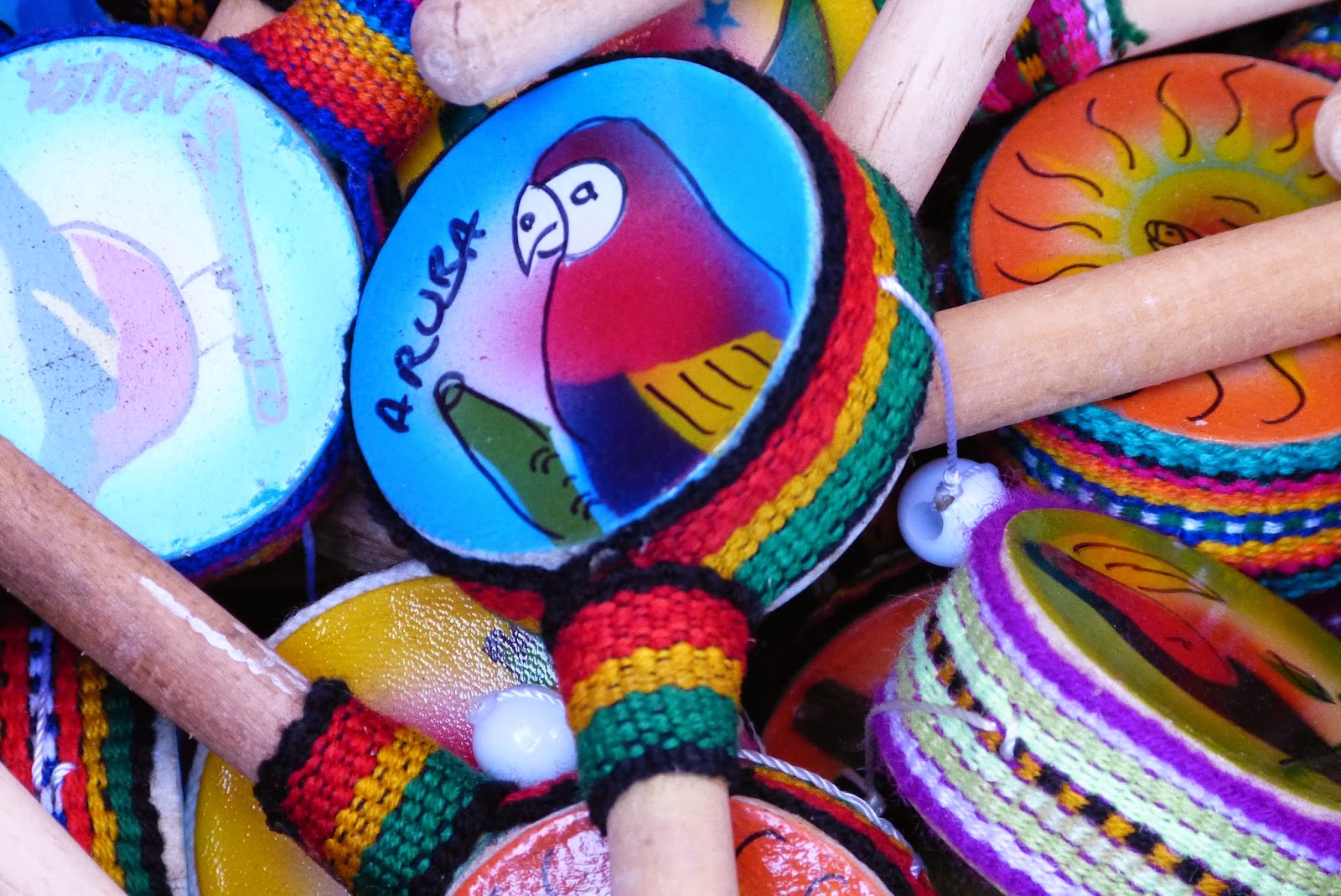
Shopping.  Aruba gets an “A” for shopping. The prices are among the best in the Caribbean for knickknacks. And while most of it comes to the Caribbean by way of China, you can also get the delicate mopa mopa crafts that are made locally from tree resin, Dutch edam and any manner of faux Delft souvenirs. There are several shopping centers and vendors along L.G. Smith, as well as vendors clustered near the port.

Bonaire: No Snorkeling Needed
This lovely island is not often visited by the mass market ships and it’s really a shame. It’s by far my favorite. The ship docks in the capital city of Kralendijk (pronounced Crah-len-deyk) and the port area is positively pristine.
The pristine waters of Bonaire
Ocean walk. Just off the pier is the Promenade, a walkway along the stunning sea. No snorkeling needed here; the show can be seen right from where you stroll, while you stay nice and dry. The water is so unbelievably clear that we watched, mouths hanging open, as schools of green-and-blue fish swam past us. It was as if we were at the zoo and the fish had been put there for our amusement. Shells, crabs and coral litter the beach below the walkway, across from homes adorned with cactus and hibiscus.

Shopping. You will think the ship took a wrong turn and landed in Scarsdale. Vendors’ wares are more made-at-home than made-in-China. Think painted soaps and needlework vs. t-shirts and ashtrays. The main shopping street has some interesting tourist shops and a chance to buy the local craft—painted gourds, which make great Christmas ornaments.

Bon Bini* to Curaçao
Bridging to the Punda in Curacao
Your ship will dock in the capital city of Willemstad. Take the Waterfront Promenade past modern shops and into a small mall bordered by the 19th century Rif Fort. There are a few boutiques and cafes, but the real excitement is just a short walk through the courtyard—the Punda District, or old part of Curaçao. Its colorful fairy-tale buildings line up to greet you as you cross the channel via the Queen Emma Pontoon, a floating bridge that opens and closes to boats and pedestrians.

Strolling. The Punda has some European-style cafes along the water and many shops both for tourists and locals. There’s also the Mikve Israel Emanual Synagogue, circa 1732 and the oldest synagogue in continuous use in the Western Hemisphere.

Shopping. Unique to Willemstad, in the old town, is the floating market, where vendors from Venezuela sell their papayas and pineapples from their small wooden boats. If you’re not inspired to try some, at least pull out your cell phone for some great photo-taking. And before you leave Curaçao, consider taking home some of the local spirit; you can’t miss it in the liquor store—it’s just about the only thing that’s blue.

Click here for more photos of the ABCs by the pier.

* Means “welcome” in the local Papiamento dialect.


Sunday, January 12, 2014

Find Culture and Photo Ops in the Food Markets of the Caribbean

There are few better places for immersing yourself in local Caribbean culture than island food markets.

Wander past open stalls laden with fruits and vegetables you recognize and some you don’t, dodge the children running in and out of the aisles as kids everywhere do, see vendors swapping gossip—it’s a glimpse into a world beyond the souvenir shops.

Best yet, they’re only a stone’s throw from the piers.
Ask a local to identify one of those strange food items. A few weeks ago in Dominica, a vendor told 
Sorrel destined for juice
me his pile of what looked like red flower tops was sorrel (in the hibiscus family), which the locals use to make juice during the Christmas season.
When you show some curiosity, you’ll learn something about the island where you’re spending your time and money.

And if photography’s your thing, these markets offer great photo ops.

But a word of warning: at some markets, such as Granada’s Spice Market, some vendors sell aggressively. And at all the markets—like those anywhere else in the world—you may find some locals who look at you with suspicion, yet others who are friendly and welcoming, and willing to answer a well-meaning question or two.

So, here’s my top list of food markets:

Roseau farmers market
Dominica (Roseau) farmers market—pineapples, bananas, mangos, ginger and many other types of fruit and vegetables are sold from open stalls in the capital city of Roseau. When you get off the ship and walk down the pier, make a left and walk down to the waterfront. For more on the market, visit the website of the Uncommon Caribbean.

Fresh from the sea in Barbados
 
Barbados (Bridgetown) fish market—all matter of seafood—mahi-mahi, tuna and swordfish, to name a few— is cleaned in full view and sold to the public. It’s along the Princess Alice Highway and if you’re walking into Bridgetown from the ship, you can’t miss it on the right-hand side. 

Spice Market in Granada


Granada (St. George’s) Spice Market—spices in bags or baskets for home use or gifts can be bought very inexpensively at the colorful and frenetic market on Grand Anse Beach. For a few dollars, you can get a unique necklace made of turmeric, nutmeg and bay leaf—spices grown on the island (note: the necklace deteriorates very quickly)

Curaçao (Willemstad) floating market—vendors come to Curaçao from Venezuela to sell their papaya, coconuts and more right from their wooden boats

And while you’re absorbing the local culture, you might consider purchasing an item or two to help the island economy. The vendors become considerably warmer when they have an American dollar or two in their hands!

Know of any other food markets? Do share!