Blogs Directory

Showing posts with label Princess Cays. Show all posts

Saturday, March 4, 2017

15 Shades of Blue

Think of the Caribbean and you think blue, right? In fact, there are many “shades” of blue when you cruise the Caribbean Sea. 

Blue is the color of:
  1. Your passport—Don’t leave home without it! And be sure it doesn’t expire within six months of your trip.
  2. The sky above your balcony—With no powerlines to obstruct your view, the sky seems bluer, bigger, bolder. And if you’re headed for the ABCs (Aruba, Bonaire, Curaçao), you’ll see more of that blue sky than anywhere else. Aruba gets only 16 inches a year of rain; compare that to 46 for New York.
    The sky seems bluer, bigger and bolder from your balcony
  3. The water below your boat—If you’ve never cruised the Caribbean, know this: those photos you’ve seen are real. The waters of Bonaire, St. Maarten, and the U.S. Virgin Island gems of St. Croix and St. John are just that blue, just that clear, just that calm.
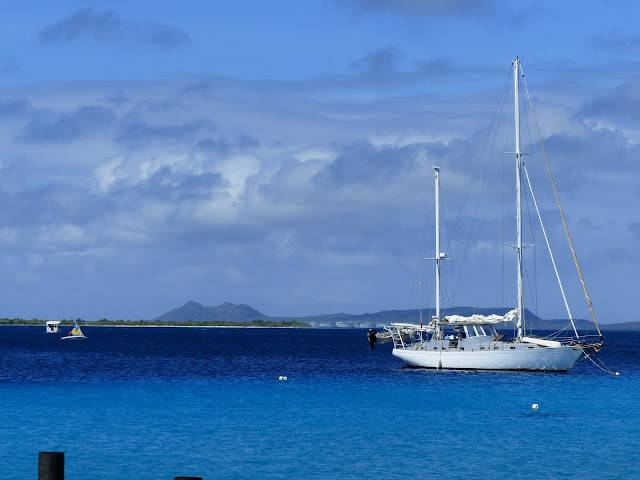
    Blue as far as you can "sea" in Bonaire 
  4. The resorts the lines call their own—Carnival’s private resorts of Princess Cays (Bahamas) and Mahogany Bay (Roatan), and Royal Caribbean’s Labadee (Haiti) boast blue hue water that’s tranquil and see-through, perfect for swimming, sunning and snorkeling. And when your ship comes in, you (and your 2,000-6,000 fellow travelers) get the resort all to yourself.
    Calm and comfortably cool is the blue water at Princess Cays
  5. The pools of port—Three neat port pools that come immediately to mind are at Grand Turk, Costa Maya and Carnival’s newest resort in the Dominican Republic, Amber Cove. These three pools are big, with plenty of room for making a splash.
    A part of the vast winding pool of Amber Cove
  6.  The flags of Barbados and Curaçao—Barbados in the Eastern Caribbean and Curaçao in the South—both great ports to visit—use blue as the primary color of their national flags, to reflect the sea and the sky.
  7.  The iguana of Grand Cayman—This blue lizard, according to Wikipedia, is a special variety found in Grand Cayman and is on the endangered list. In fact, the only one we saw on our visit was this guy below:
  8. The cobblestones of old San Juan—Pull into port in San Juan and you’re just a few steps away from cobblestones made from adoquine, a blue stone cast originally brought over on Spanish ships.
  9. The logos of the lines—Not surprisingly, the mermaid, ship, anchor and X logos of Princess, Holland America, Royal Caribbean and Celebrity are all blue.
  10. Curaçao’s namesake liquid—Made from local oranges, with a little help from food coloring, curaçao liqueur is unmistakable in its color and squat round bottles.

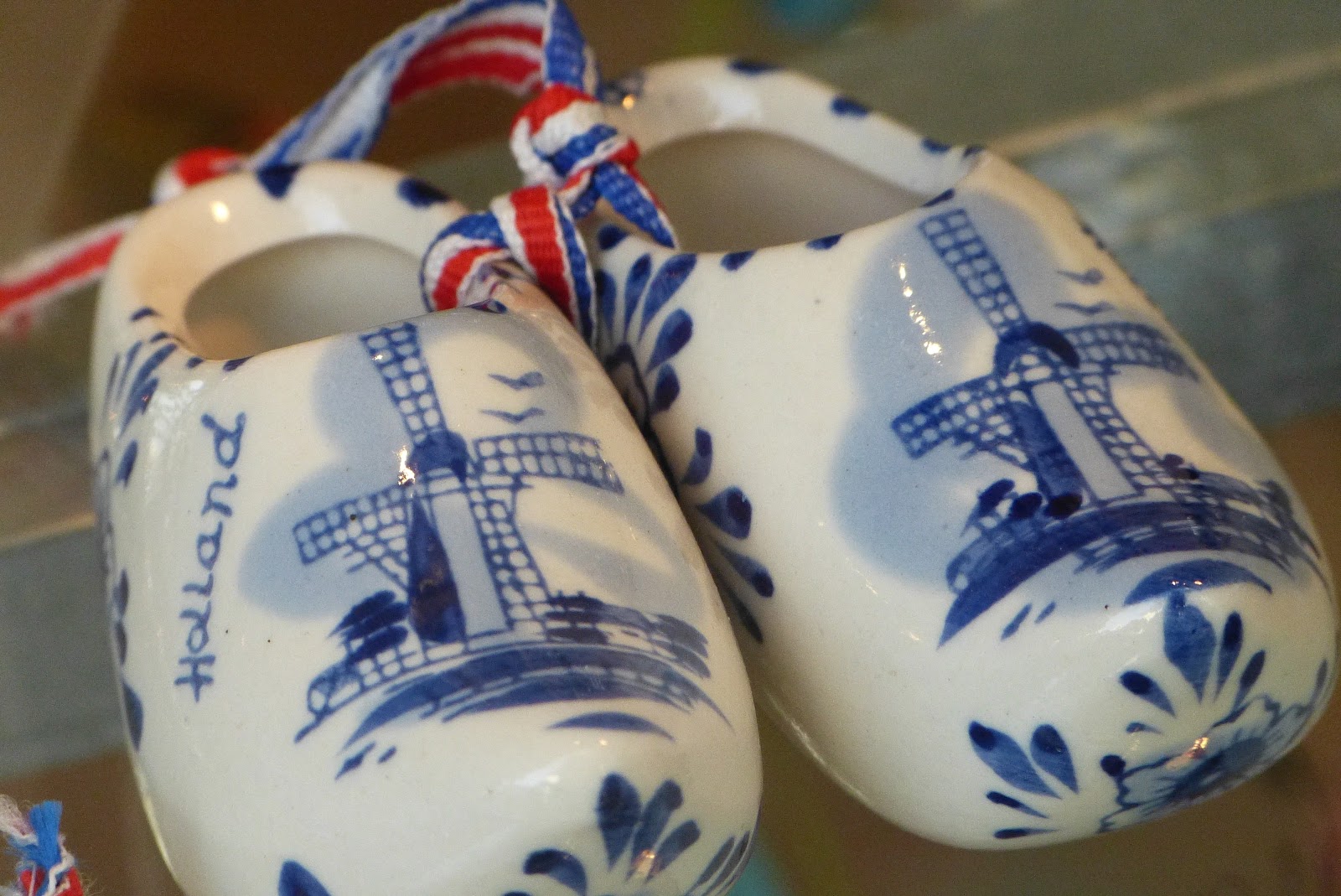
  11. The delft and faux delft trinkets of the ABCs—Browse the tourist shops of the Dutch isles of Aruba, Bonaire and Curaçao to find some of the real hand-painted stuff, but more of the mass-produced kind. These are inexpensive, and make great Christmas tree ornaments, magnets and collectibles.
    Mass-produced delft, but that everyone can afford
  12. LarimarThe lovely baby blue stone is from the Dominican Republic, but sold on many of the islands at a very reasonable price (note that they vary in quality). We picked up good quality earrings in St. Thomas’ Charlotte Amalie for about $40.
  13. The female cruiserWhat cruising woman can resist a shirt with blue-and-white stripes in classic nautical style (or “nausical” as one retailer calls it). Navy blue, says Wikipedia, got its name from the dark blue uniforms traditionally worn by many navies around the world.
  14. That sign that it will come to an end—Alas, blue is also the color of the Customs card that appears on your bed—sometimes as early as the second day of the trip.
  15. My mood…when it’s all over.
Saturday, October 15, 2016

Monkeys and Chickens and Lizards, Oh My! A Walk on the Caribbean’s Wild Side

Your idea of a wild time in the Caribbean might be endless buckets of beer by the sea.

But there’s another wild side to the Caribbean—and you’ll want to take your camera for this one. 

Look out for this fauna and flora to fawn over when you get back home:

The fauna for ya

Iguanas—They’re everywhere. All over the rocks at Crown Bay pier in Charlotte Amalie, St. Thomas. In Aruba’s Oranjestad, wandering around Wilhelmina Park. In fact, they’re so common in Aruba, their likeness shows up everywhere—even on flip-flops.
Bring some iguanas home from Aruba's Oranjestad

And now, the real thing--posing for the camera in Charlotte Amalie's Crown Bay pier
Chickens—Unless you grew up on a farm, the sight of roosters roaming around may be a bit startling. But you’ll see them in downtown Charlotte Amalie; Georgetown, Grand Cayman; and Frederiksted, St. Croix.

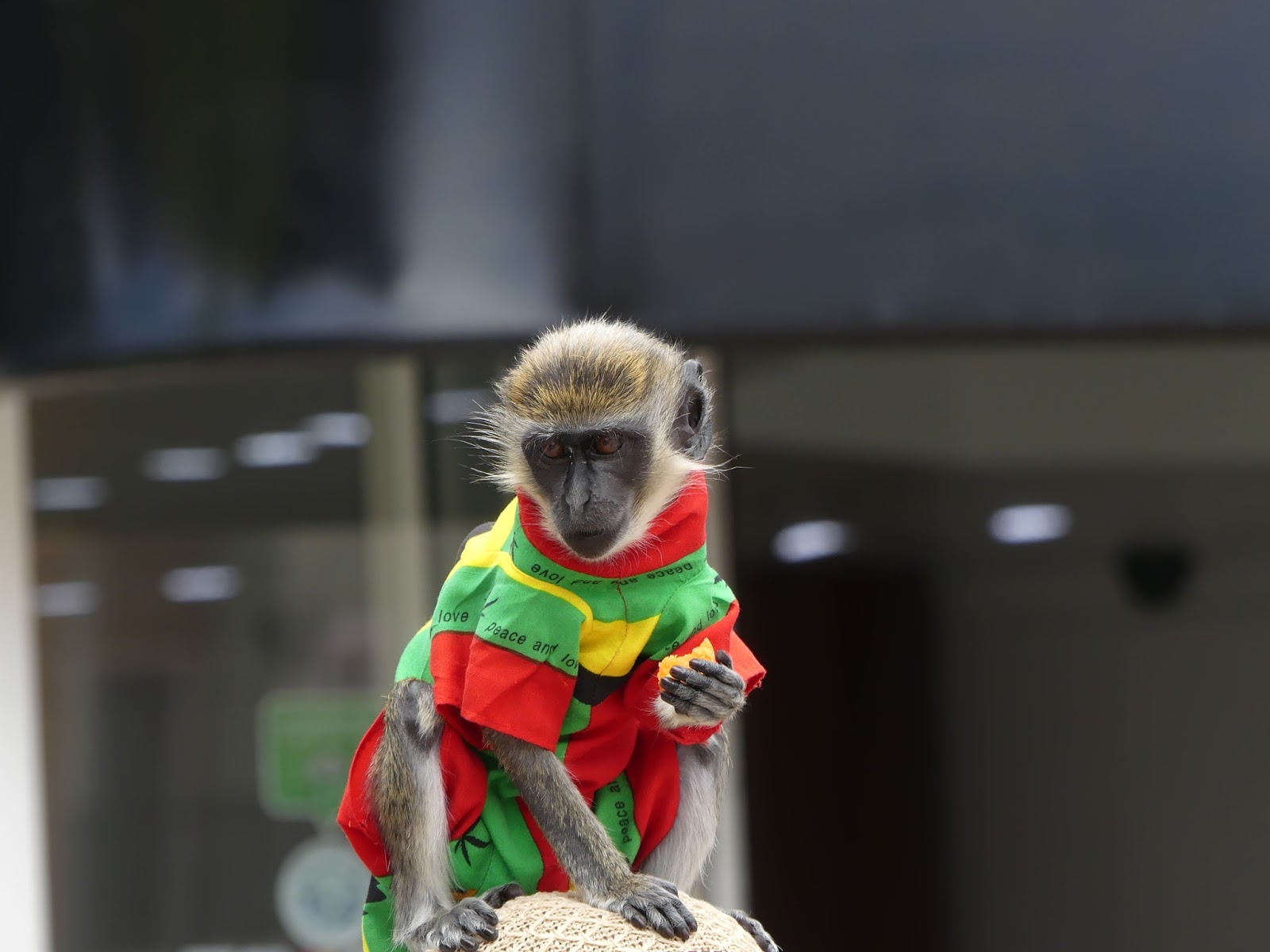
Monkeys—You don’t have to venture far into St. Kitts to see the little local vervet monkeys. Just a stroll down the pier in Basseterre will do. There are several on the arms (or heads) of the locals, picture-ready for a fee. 
All dressed up and ready to go--into your arms for the camera and a fee in Basseterre, St. Kitts
Cats—San Juan has a cat problem. They’re on top of cars, under cars, roaming the streets, lying on sidewalks. But, like most animals, if you don’t bother them, they won’t bother you. And some of them are so pretty and robust, you’d swear they were pets.
Checking out the tourists from the sidewalks of San Juan

Caribbean parakeet—I once had a parakeet in a cage. Imagine my surprise to find several pecking away high up on a palm tree on the busy L.G. Smith Boulevard in Oranjestad. It’s yet one more reminder when you travel: look up.
Parakeets pecking at the palms in Oranjestad, Aruba
Don't forget to look up when you're in Aruba's Oranjestad--you don't want to miss the parakeets
Fish—With water so clear—particularly off the pier in Kralendijk, Bonaire and to some extent, Princess’ private Bahamian island of Princess Cays—fish become entertainment. It’s yet one more reminder when you travel: look down.

In Grand Cayman, take a left from the pier, and walk a few blocks along the water. You’ll come up to a small fish market on the beach. After they’ve cleaned the fish, the vendors toss the remains into the water and you can watch the live stuff—some of them several feet long—zooming in for an easy meal, like pigeons descending on a hunk of bread.

Stop and smell the flora

Bougainvillea—These paper-thin flowers come in some 300 varieties and many bright colors, and you’ll find them all over the Caribbean, climbing the walls and hanging down planters.

Palms—They’re on the beaches, in the streets, in the yards, in the gardens. They’re tall and top-heavy. They’re useless when you’re in search of shade, and they break easily in storms. But what would the Caribbean be without its palms?

Cacti—The ABC islands of Aruba, Bonaire and Curaçao are super dry, despite being in the middle of the ocean. So, it’s not unusual to see cacti and palms sharing the same front yard.
Palms and cacti share this yard in the cruise port in Bonaire
Unlikely neighbors in this yard in KralendijkBonaire
Hibiscus—Big, bold and colorful, the hibiscus is common in the tropics, and is the national flower of Haiti. But its petals are not just for admiring—they also find their way into tea in Mexico, and are even dried and garnish desserts.
Cozumel is just one of the cruise ports you'll find hibiscus
Cozumel has its own share of the showy hibiscus
Plumeria obtuse—White and yellow clumps of loveliness, these West Indies natives can be found in the Bahamas, Mexico, Barbados, Belize and other warm places.
These were blooming along the waterfront of Barbados' Bridgetown
Frangipani—This multi-colored beauty is known for its fragrance and is sometimes an ingredient in perfume. It’s been said that its smell becomes most intense at night—to lure moths for pollination. Don’t let their heady smell tempt you to touch them, though, the sap is an irritant.
These frangipani caught our eye while shopping in the Pelican Village Craft Centre in
Bridgetown, Barbados
Mango—A staple of the Caribbean diet, when they’re in season, you’ll see them hanging from trees at ports like Roseau, Dominica and Charlotte Amalie, St. Thomas. Bananas and plantains are plentiful too, as are coconuts, throughout the Caribbean islands.
Not quite ripe, but appealing just the same, hanging off a tree in St. Thomas' Charlotte Amalie
Cinnamon, cloves, ginger, mace, allspice—These are all grown in Grenada. The island is the world’s second-largest producer of nutmeg—the spice is even on the Grenadian flag. Baskets of pre-packaged spices are sold in the port city of St. George’s and make great holiday gifts for the cooks on your list.

Put more spice in your life with these souvenirs from St. George's, Grenada
When I look at this list I’ve just created—and it’s only a sliver of the Caribbean’s charms—it’s easy to see why the islands were seized, battled over and settled on. And are so much fun to visit!

Friday, June 10, 2016

Some of the Best in Cruising Part 2: The Ports

When I’ve been asked for my favorite Caribbean island, I struggle to find an answer. Because I like so many, each for a different reason. But what they all have in common is plenty to see and do close to where the ship pulls in (no excursion required!). Here, then, is my “best of” list for the Caribbean cruiser:

Shopping: Cozumel. There’s great shopping right at the pier, or you can grab a cab into town for a mind-numbing selection of more of the same. Colorful ceramics; onyx chess sets and figurines; silver jewelry with gems and without; and inexpensive knickknacks from maracas to magnets makes shopping a blast. You’ll find consumables there, too. Read more at Chocolate, Rum and Spice: Food Souvenirs of the Caribbean.  

Cozumel in color.
Best beach: private islands. These are, simply put, paradise. Carnival’s Mahogany Bay in Roatan, Honduras; Princess Cays in the Bahamas; and Royal Caribbean’s Labadee on Haiti offer the quintessential Caribbean beach day. They’ve got powdery sands and calm blue waters perfect for swimming and water sports; palms and hibiscus and bougainvillea to feast the eyes; and lounge chairs everywhere, along with plenty of shops and ways to soothe a parched throat.

The private islands are surely the best way to relax on a cruise.
Lined up and ready to go at Princess Cays.
Biggest variety: St. Maarten. A beach right in town, cheap chair-umbrella-beer packages, surfside seafood shacks, water sports, great shopping, gambling and even a blast from the past—an automat—selling local foods like the Dutch kroket. This lively place of merriment is constantly changing—for the better. There’s more at “How to Spend Your Cruise Day in St. Maarten.”

Prettiest harbor: Dominica, Bonaire. This one’s a tie. Dominica has perhaps the most compact port, with its location at the foot of surrounding velvety green hills. Be prepared to invest some leg muscle if you walk around town, where you can visit a farmers market or grab some free wi-fi at the local library. Or, shop the stalls at the pier, where you can get locally woven baskets and other souvenirs.

Then there’s the transparent waters of Bonaire, where a stroll along the waterside promenade is like a visit to an aquarium. Vibrant-colored fish swish by underfoot, and the sea around you is a painter’s pallet of shades of azure. Read more at Knowing Your ABCs.

A walk along the promenade in Bonaire is like a visit to an aquarium.
Most European-ish: St. Barts. Part Riviera, part Caribbean, totally French, St. Barts is remarkable for many reasons. You won’t find any bargains here, but you’ll marvel at the mega yachts parked in town, the hilly and winding streets that force cars and all manner of local vehicles to part halfway on the sidewalk. You can sip café au lait at a seaside café, nibble on quiche from the local patisserie, marvel at the wines lining the walls at the supermarche´ or browse the fashionable shops. St. Barts is off course and worth it.

Paris? Mais non, the patisserie of St. Barts.
Time travel: San Juan. With two well-preserved, exhibit-laden forts, a dramatic fountain honoring the island’s birth, blue cobblestone streets, mosaic stairwells, and even shops selling Spanish hand fans and the short jackets of the matadors, the old town of Puerto Rico’s capital takes the cruiser back in time. No DeLorean needed here—just a little bit of pedestrian power.

San Juan is one of those ports that are made for walking.

The ancient wall today protects San Juan from sailboats.
Memorable feature: Curaçao. This Southern Caribbean Leeward island off the Venezuelan coast has several oddities—a floating bridge that takes you to the colorful Punda District when it’s not stepping aside to let boats through, and a fruit and veggies market where vendors sell their stuff out of wooden boats tied up to the dock. And if that’s not enough, how about liquor that’s made from oranges but is blue in hue?

Float your way to Curacao's Punda district.

So, that’s my “best of list.” What’s yours?

Musing’s Top Tip: Did you miss Some of the Best in Cruising Part 1? Then check it out here, for ship life highlights—from what’s on your plate to what’s on the stage.


Friday, October 23, 2015

Creature Feature: When the Animals Steal the Show

What could possibly rival people-watching on a cruise? Checking out our other fellow creatures—the animals. And there are creatures from north to south, just waiting to perform for our cameras.

The Alaska ports have their kayaking, glacier-viewing and craft crawling. Down in the Caribbean, there’s parasailing, snorkeling and jewelry shopping. But sometimes, it’s the wildlife that steals the show. 

Here, for your amusement, are some featured creatures from our past cruises:


How much is that doggie in the window? (Old San Juan)

You’re not getting my catch! (George Town, Grand Cayman)

Hey, where’s my dressing? (Wilhelmina Park, Oranjestad, Aruba)


The sea was too salty for these gulls (Princess Cays)


Getting the eagle eye (Ketchikan, Alaska)


Saturday, August 1, 2015

Is a Smartphone the Smart Choice for Cruise Picture-Taking?

Smartphones seem to be the camera of choice on cruises these days. Well, why not? They’re compact, slip easily into your pocket and double as a phone, TV set, radio and game console. Photo album, calculator, mirror, flashlight…
 
In fact, smartphone cameras are so easy to use that they turn everyone instantly into a photographer. But is a smartphone the smart choice to capture and safeguard your cruise memories?
 
Cameras can be easy to use too—and give you much better results. I barely ever take mine out of the “IA” setting and have gotten some really amazing shots. IA stands for “Intelligent Auto,” which means the camera uses the intelligence the photographer clearly lacks and automatically adjusts to the conditions (e.g., a lot of light, not a lot of light). So you don’t have to do a thing but aim and shoot.

Of course, you can keep on using your smartphone as a camera. But know the downsides:
 
Tiny sensors limit what you can do. Smartphones typically have tiny sensors that let in less light. So you end up with fuzzy photos of the parades on the Oasis Promenade or acrobats in the Caribbean Princess’ piazza.
 
Wimpy flashes keep you in the dark. Smartphone flashes are minimal, so photos of your friends and family inside the ship can’t be taken from more than a few feet away. 

Hard to hold makes for shaky shots. Smartphones are very light and hard to hold steady, making it tough to get your photos crisp and clear. Throw in a little boat movement and you might as well throw in the towel.
 
When the sun comes out, the screen goes away. The smartphone’s screen washes away in bright sun. Which means you have no clue what you’re shooting.  
The RX100 is even smaller than the Galaxy III


Small zoom misses opportunities. There’s barely a zoom capability on smartphones, so you miss out on capturing Caribbean parakeets on palms over the streets of Aruba, rainbows melting into the hills of Dominica from your verandah and other in-the-moment photos.

If, at this point, I’ve succeeded at convincing you that a real camera is the way to go, how do you choose one? You’ll need to do some research, but below are a few thoughts. And note that these cameras are no bigger than a smartphone:
 

For inside the ship You’ll want something with a larger sensor, which lets in a lot of light and allows for photographing inside and up close. So, you can get great shots of family and friends, ship food, artwork and just about anything your imagination can conjure up. An example is the Sony RX100.

The RX100 captured this yummy shot on Celebrity's Constellation.
For the ports
A camera with a substantial zoom (up to 30x) is great for outdoor faraway shots, like seagulls in flight or the blue ice steeples of Alaska’s Glacier Bay from the deck. With a camera like this, you’ll find in your photos what your eyes can’t even see. You’ll want one with a viewfinder, so you know what you’re shooting, even in bright sun. And it will help you hold the camera steadier. An example is the Panasonic ZS50.  

This seagull at Princess Cays didn't know the ZS50 was pointing right at him.
A jack-of-all-trades, but not pocket-size
You can even get a camera that has it all, a “superzoom,” with a wide angle for close up, good zoom (e.g., 24x) for far away, and a viewfinder to boot. This will be bigger than a smartphone, though, but is easier to hold and much more versatile. An example is Panasonic FZ200.

To get shots like this one on Princess Cays, you'll need a bigger camera, like the FZ200.
All digital cameras today not only come with bigger sensors than a smartphone, but also image stabilization, to keep your shots steady even when your hand isn’t; and high definition video.

The right camera will open up a whole new world of exciting photo possibilities onboard and on shore. For some ideas on the cruising creativity that can be yours, see the posting Fun Ship Photography: Unleashing Your Inner Artsy-Fartsy.
 
And just what do you do with all your terrific new shots? Check out What to Do with Those Cruise Ship Photos.
 
Musing’s Top Tip: Some great sites for doing research on what camera to buy are amazon.com and http://www.dpreview.com.

Photos by RJ Greenburg

Friday, July 3, 2015

The Best Way to Relax on a Cruise?

Find one with a private island on the itinerary.
 
You’ll find yourself transported to a tropical oasis that you have all to yourself (well, along with a few thousand of your fellow passengers). A whole hassle-free day to savor the sunshine, dig your feet in the sand or float face up, while your cares drift away to sea.
 
Or jet ski, water slide, zip line or craft shop. Photograph the flowers. Walk the paths. Chow down or booze up.

However you choose to spend it, a day at the cruise line’s private beach offers the ultimate in relaxation and a chance to spend the day your way.
 
Here are quick takes on some of the cruise lines’ private spots:
 
Mahogany Bay—When we’ve stopped in Roatan in the past, we’ve docked in Coxen Hole, a poor, but interesting port city. On our recent Caribbean Princess cruise, however, we were surprised to find ourselves instead sidling up to the pier at Mahogany Bay, created by Carnival, Princess’ parent company. Carnival and NCL also make stops here.
 
Hibiscus, palms, and other tropical flora and foliage frame the path from the pier. Hang a right for a short walk to paradise. The pool-like blue waters are calm and clear. You can laze in padded loungers on the beach or try one out that sits on the water. Rent a paddleboat, kayak or snorkel.
 

There are restaurants and bars selling seafood and jerk chicken, and from a stand on the sand, a fellow sells coconut water, shell and all.
 
Or if you’re not in the mood to do the walk, there’s always the chairlift. Yes, you read that right. A seat in the sky but with no snow below. Instead, there are sweeping views of the bay, beach and ship. For $14, adults can do it all day long (for kids, it’s $8).
 
If you hang a left off the ship, you’ll find shopping, more restaurants and bars. The centerpiece is the craft market, where you can buy reasonably priced wooden bowls and the like in mahogany, watch cigars being rolled and purchase for the road, taste locally made rum and chocolate, or browse fine jewelry or the usual assortment of kitschy knickknacks.


Mahogany Bay and Labadee dock, which is a plus for both. It makes it a snap to bop on and off the ship as many times as you want.
 
Labadee—When you’re in Labadee, you have no clue you’re on Haiti. Surrounded by lush green mountains, Royal Caribbean’s private hideaway is a sprawling slice of heaven, with nook and crannies so that you never quite feel the crowds.

In fact, it’s so large that signs point out the way to its several beaches, myriad water sports and walkways.
You can get your hair braided, have a massage, play volleyball or do the aqua park. Swing in a hammock, hike the trails.

There are restaurants and bars, and the many souvenir vendors make sure you know they’re there too. Bargaining is both welcome and expected, and there are inexpensive souvenirs made in Haiti as well as China. Bring money, though, because like Mahogany Bay, your sea card won’t get you anywhere with these merchants.
 
Labadee is used by Royal Caribbean and Celebrity ships.
 
Princess Cays—Princess’ special island in the Bahamas has a long, lovely beach, with sections to the right and left of the pier, both with waters that are good for swimming and snorkeling, plenty of sandy stretches and padded lounge chairs in the sun and under the palms.

For your own personal space, you can rent one of the colorful air-conditioned beach bungalows. Six hours for four people will set you back $249.95.
 
There’s kayaking and sailing, restaurants and bars, a sprinkling of craft vendors along the left beach, as well as a craft market tucked away not from the pier entrance. To get into the market, though, be sure to bring your driver’s license, because just a sea card and smile won’t be enough to get you past the guard.
 
Also, note that Princess Cays is a tendered port. While only about a 10-minute ride from ship to shore, given the number of people always waiting to board, going back and forth multiple times isn’t really feasible.
 
No matter which of these three islands you end up at, if you’re lucky with the weather, you’ll no doubt be tearing yourself away at the end of the day to make it in time for sail-away.
 
Musing’s Top Tip: For a ton of info on what to do, what to see and videos on both, what weather to expect, where there’s wi-fi and much more in Roatan and other port stops, check out cruiseportinsider.com.

Photos by RJ Greenburg

Saturday, November 22, 2014

Where the Wild Things Are

For most people, Caribbean cruises are simply about fun in the sun. Wildlife (unless you’re planning to qualify yourself), is not high on the list.

But wildlife is there for the watching—without even leaving the port. Just look up, look down and look around whenever you’re on the ground:

Iguanas—In Aruba, they feed them. In St. Thomas, they goad them. And in Cozumel, they leave them alone. The lizards seem to be just about everywhere.

Plotting strategy on the rocks in St. Thomas
They’ve nearly taken over Charlotte Amalie’s Crown Bay Harbor in St. Thomas. Dozens climb in and out of the rocks at the pier, mugging for photos or begging bemused cruisers for handouts. They’re the pigeons of Paradise.

In Wilhelmina Park in Aruba’s Oranjestad, they also act like they own the place. They bask in the sun, watch the kids play and fight over the lettuce the park staff throws them.

They’re harder to spot in Cozumel, where they roam the waterfront, blending into the terrain. If you look closely, you can spot them on the walk from the pier into town.


Peering from a palm on
 L.G. Smith Blvd. 
If you don’t get enough of them in the wild, you can always pick up a likeness; they’re on flip flops, ashtrays and many other tchotchkes from China. 

Caribbean parakeets—We spotted the brilliant green birds on Oranjestad’s main drag, picking at the palm trees.

Hummingbirds—While hardly unique to the Caribbean, these little whirlwinds can often be found around vibrant tropical foliage. My spouse captured one mid-air as it headed from one flower to another in Princess Cays.

Pelicans—We’ve seen these on several islands, but where I remember them most is in Grand Cayman. One had planted itself firmly at the edge of a little rickety row boat, perhaps to get first dibs when a new catch came in.

Vervet monkeys—I’d heard about the little green monkeys indigenous to St. Kitts, but was unprepared to see one on the arm of a local as soon as I’d gotten off the ship. Silly me, I quickly learned my photos didn’t come free.

Then there was that day at sea, brilliant and made for sun-bathing, when the cruise director suddenly broke the bonhomie with an urgent address over the PA, “A school of whales was just sighted starboard.” Within seconds, some hundred bathing-suited, sunscreen-slathered cruisers, like a herd of cattle, stormed starboard for a look-see.

Then, a few seconds later, over the PA, “Sorry, just kidding.”

We’d been had. Groans ensued as the scantily clad returned to their loungers and Bahama Mamas.

Wild things do abound, you just need to know where to look. But remember that if all else fails, there’s always Señor Frog!

Musing’s Top Tip: Want quick video snapshots of the ports to help you plan? Check out onboard.com. It’s a travel agency site, but has 50 short and well done videos with highlights of the ports at many Caribbean and other destinations.